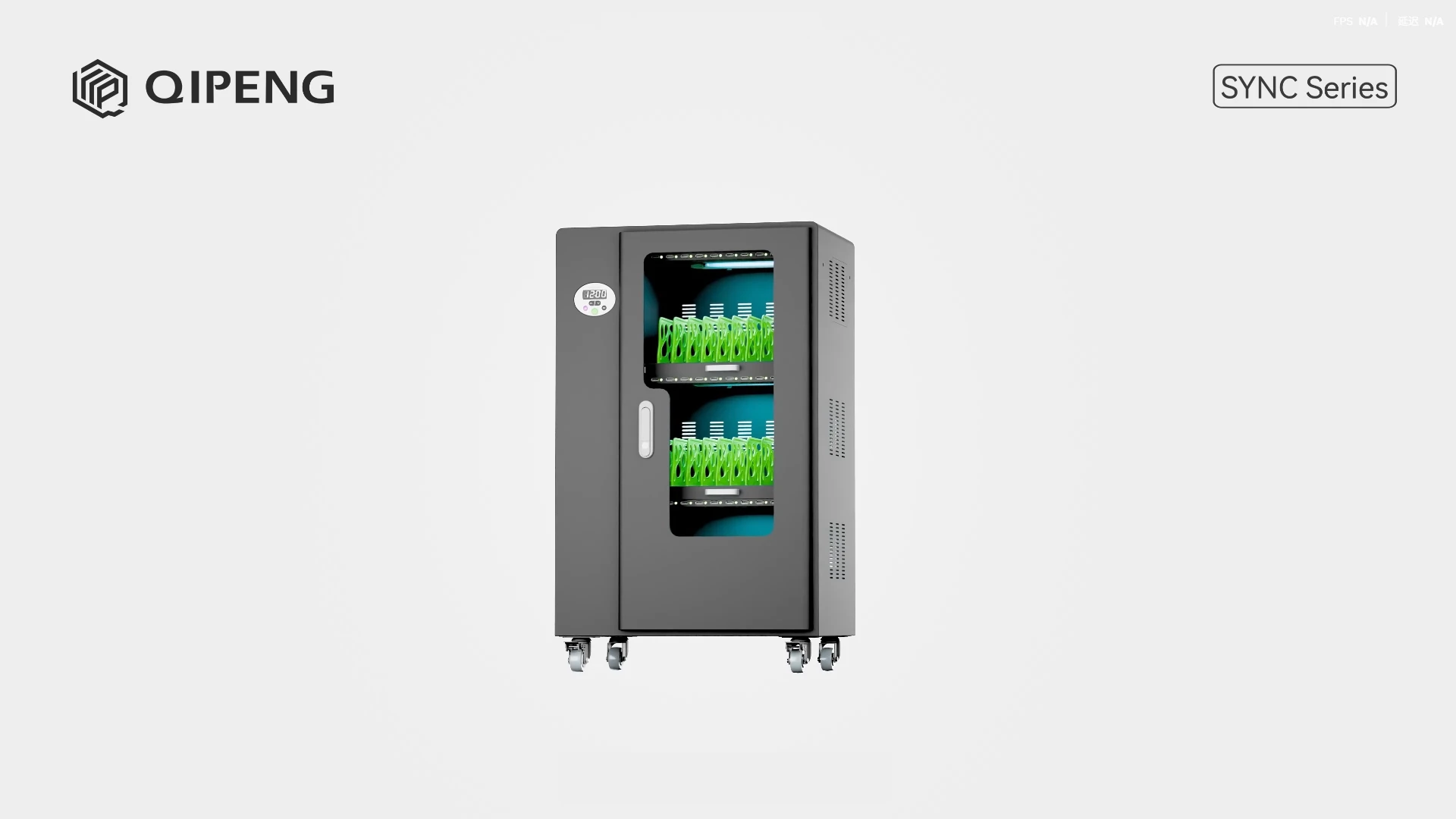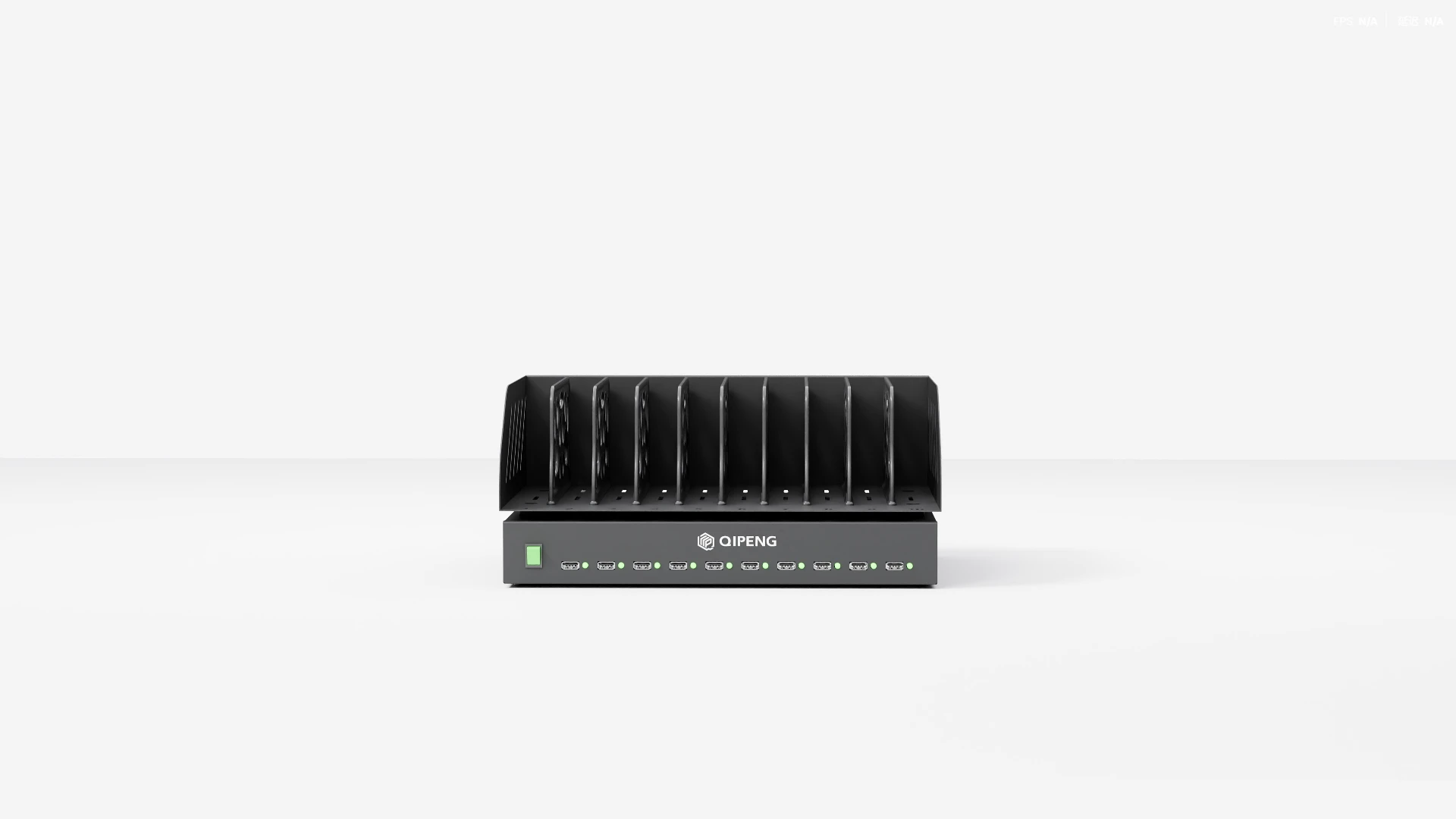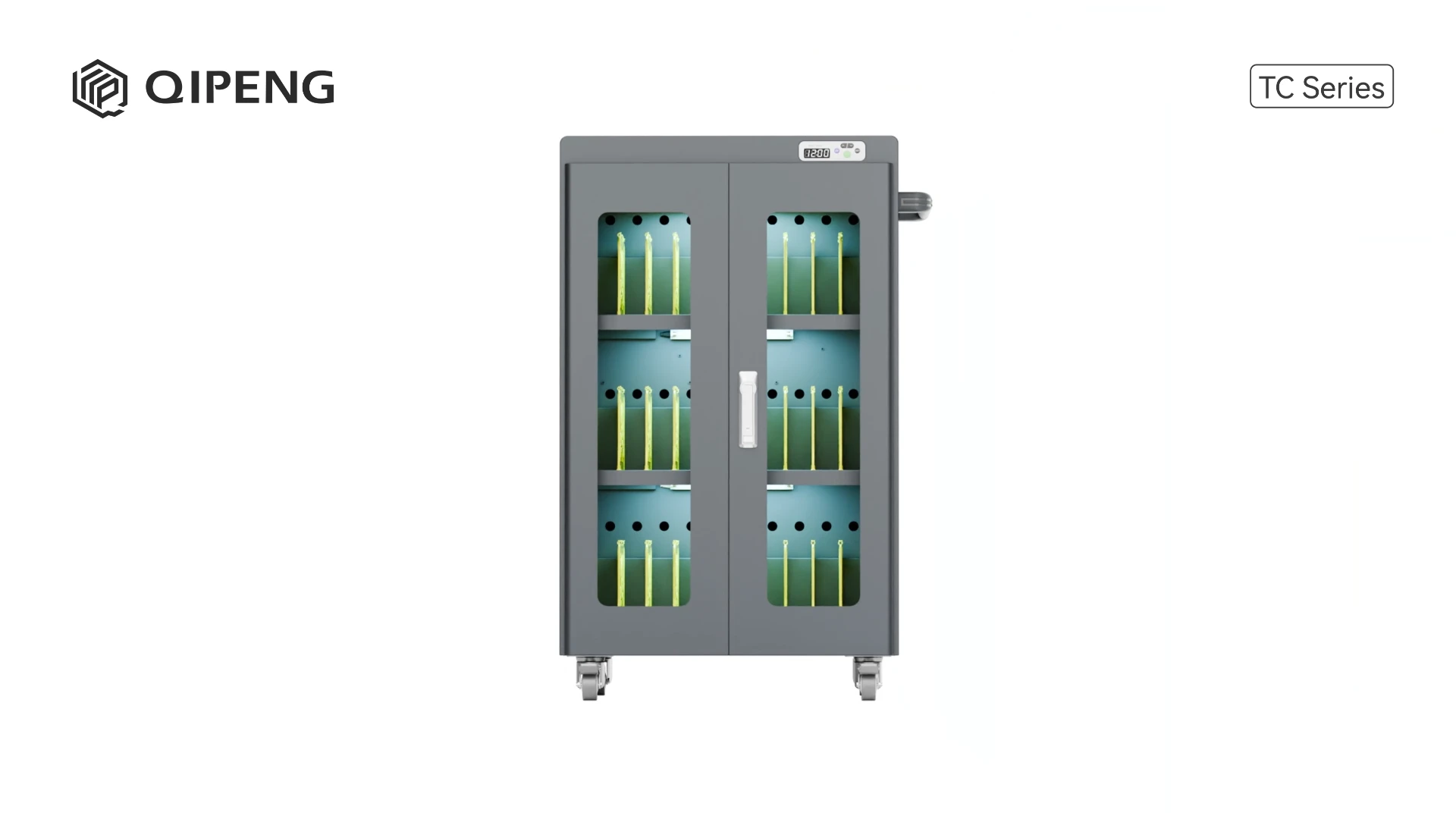
Short answer: Charging cabinets for schools keep all classroom tablets or laptops in one locked place, charge them safely at the same time, and make handover quick, so devices are ready when each lesson starts. Qipeng began in 2013 by building charging management for educational tablets, and its range now covers carts, wall-mounted cabinets and lockers for different school needs.
Why do schools need charging cabinets?
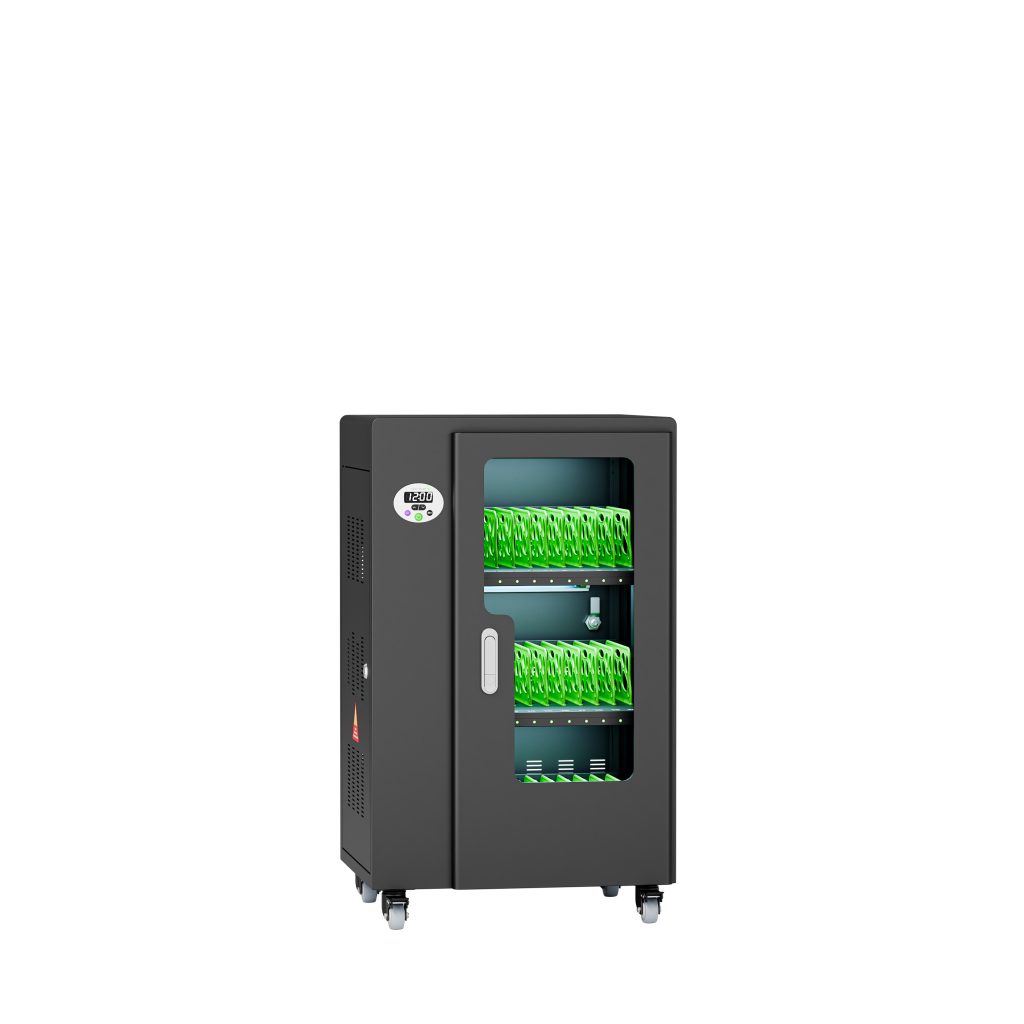
As digital classrooms grow, schools end up with dozens of tablets or laptops that must be charged, stored and shared. Loose chargers and power strips are hard to manage and easy to lose. A charging cabinet turns the whole set into one organized, lockable unit.
The main benefits
1. Devices are ready for every lesson
All ports charge at the same time. On the PD series, every port has an independent circuit, with no power sharing and no reduction in speed when all ports are in use. Timers and countdown auto power-off prevent overcharging and protect battery life.
2. Safer than power strips
Qipeng cabinets use multi-layer circuit protection: overcurrent, overvoltage, grounding, overtemperature and overload protection. Independent port circuits mean a fault on one port does not affect the others, and cooling fans start automatically when the cabinet reaches 45 degrees C on the PD and SYNC series.
3. Security and accountability
Floor-standing cabinets have key or mechanical locks, and the SP wall-mounted cabinet uses an electronic password lock. For laptops or devices assigned to individuals, the LC locker offers four unlocking methods: face recognition, fingerprint, password and RFID card.
4. Better hygiene for shared devices
Qipeng added UV-C disinfection to its cabinets in 2020. Models such as the PD, SYNC, MS and TB series include it, and according to the product descriptions it helps reduce cross-contamination on shared devices. It does not replace regular cleaning. Read more in our guide to the UV-C charging cabinet.
5. Easier device management for IT
The SYNC series connects to a computer over USB, so IT staff can install or uninstall software, update the system, transfer files and reset data across many devices in batches.
6. Flexible placement
Carts with casters and push-pull handles move between classrooms. Wall-mounted cabinets such as the SP and WH series save floor space in libraries and meeting rooms.
Which cabinet fits which school scenario?
| Scenario | Suggested series |
|---|---|
| Shared tablet set moved between classrooms | MS, TB or PD |
| Tablets that need app updates in batches | SYNC |
| Laptops for a computer lab | TC or PD-65W |
| Devices assigned to individual students or staff | LC locker |
| Fixed charging point with limited floor space | SP or WH |
Planning tips
- Count your devices and leave room for growth. Qipeng cabinets range from 10 to 65 bays.
- Measure your largest device with its case. The TB series has quick-release dividers for different thicknesses.
- Check rated power and input voltage, and ask a qualified electrician to confirm the circuit before installation.
- Plan the route: a 30-bay floor-standing cabinet weighs about 44 kg net.
- See our guide on choosing a charging cabinet for 30 tablets and the comparison of carts, wall-mounted cabinets and lockers.
Frequently asked questions
How many devices can one cabinet hold?
From 10 to 65 devices depending on the series. A 30-bay cabinet suits a typical class set.
Can I charge tablets that have thick protective cases?
Yes, with the TB series. Its quick-release dividers adjust slot width for different thicknesses and cases.
Can you supply schools outside China?
Qipeng states that it serves customers in over 80 countries and supports OEM/ODM. Contact us with your device list and quantity. More answers are on the FAQ page.
Planning a classroom rollout? Tell us your devices and quantity, or browse the product shop.